

Vocabulary: The Hidden Barrier
For many learners, especially ELLs and SLIFE students, the difficulty lies in language, not in the math itself. Without targeted support, students often struggle to access grade-level content, even when they are able to understand the concepts and have the background knowledge.
The Language Challenge
Some students have a strong number sense, but they lack the academic vocabulary needed to understand the class content. This makes it difficult to understand teacher explanations, decode word problems, and interpret standardized test questions.
Assessment Gaps
Language barriers prevent students from being able to demonstrate their full understanding. This is especially prevalent during tests and classroom discussions. The lack of vocabulary creates an equity issue rather than a skill issue.
SLIFE Students
SLIFE students, Students with Limited or Interrupted Formal Education, are simultaneously learning content and language. They lack the background knowledge, and all the classroom vocabulary is unfamiliar. They need additional support in class.
Retention Without Context
One-time definitions don't stick. Students need continuous vocabulary support in order to internalize their understanding. Through repeated contextualized exposure to vocabulary, students are able to build a lasting understanding of academic language.
Phase Process for
Teaching Vocabulary
3
➊
Phase
Goal: Build an initial familiarity with the word and it's meaning
In Phase 1, we want to help students recognize and understand the meaning of each term. This will give them an understanding of what we are teaching as we move forward in expanding their learning.
Explicit Exposure
What to do:
-
Clearly state and display all vocabulary words. Focus on the essential terms.
-
Pronounce the word and have students repeat it. They need to know what to say.
-
Use student-friendly definitions. Keep them simple and easy to understand.
-
Connect terms to prior knowledge and real-world examples. Make it real for students.
-
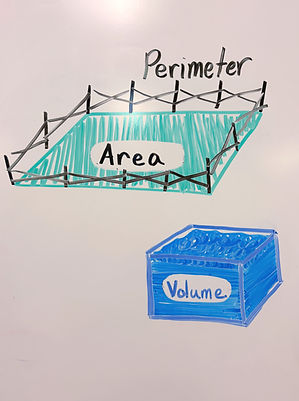
Use visuals, gestures, or models. Help students understand by using more than words.
➋
Phase
Goal: Help students make connections to the meaning
In Phase 2, we want to help students make sense of the word through interactions and reasoning. This helps to internalize the meaning of each term. This will help them to understand how to use each term in their problem-solving.
Deepen Understanding
What to do:
-
Use the word in different contexts. Include examples and nonexamples.
-
Have students discuss the words. Make sure to provide sentence stems if needed.
-
Try activities like:
-
Sorting examples vs. non-examples
-
Matching definitions to visuals
-
Concept maps or Frayer models
-
-
Break down parts of the word using prefixes and roots where possible.
➌
Phase
Goal: Have students independently use vocabulary accurately
In Phase 3, we want students to apply their knowledge of the vocabulary to their classroom communications. This allows them to demonstrate an understanding of the terms and communicate effectively. Here students are producing the language, not just recognizing it.
Apply & Use in Context
What to do:
-
Require vocabulary use in problem-solving and explanations.
-
Ask students to justify answers using vocabulary by speaking or writing.
-
Try activities like:
-
Turn-and-Talk
-
Defend their answer choice using error analysis questions
-
-
Incorporate it into assessments and performance tasks.