
Why Math Vocabulary Matters for English Language Learners in High School
Updated: Jan 23
If you’ve ever had a student who could do the math but completely misunderstood the question, you’ve already seen how powerful math vocabulary can be.
In high school classrooms, math vocabulary is often the quiet roadblock. We may assume students are struggling with the skill when, in reality, they’re struggling to understand the language being used to describe it. This is especially true for English Language Learners (ELLs), but it also affects many students who already feel behind in reading.
Understanding math vocabulary in high school isn’t just about knowing definitions; it’s about being able to read, interpret, and make sense of academic language that wasn’t written with students in mind.

When “Breaking It Down” Still Isn’t Enough
Most teachers try to support vocabulary in some way. We pause during notes, define terms together, and reword textbook definitions in simpler language. And yet, students still ask, “What does that mean?”
Textbook definitions are often:
Long and abstract
Packed with multiple ideas at once
Written using formal academic language
You might break a definition into smaller parts, explain it out loud, or even translate it, only to realize students are still unsure how to use the word correctly. They may copy the definition, nod along, and then completely misapply the term on the next problem.
That’s not a student effort issue. That’s an access issue.
Why Academic Vocabulary in Math Is Especially Hard for ELLs
For English Language Learners, academic vocabulary in math adds an extra layer of difficulty. Many math terms don’t align with their everyday meanings, and students are expected to understand them almost instantly.
Translation can help, but it isn’t a magic solution. Some ELL students have limited formal education in their home language. When that’s the case, a translated definition may be just as confusing as the English version.
These students aren’t just learning math. They’re learning a new language, academic sentence structures, and unfamiliar school expectations all at the same time.
Supporting ELLs in Math Without Lowering the Bar

Supporting ELLs in math doesn’t mean simplifying the content or lowering expectations. It means being intentional about how vocabulary is introduced and reinforced so students can actually engage with the math.
Two small but powerful shifts can make a big difference:
Use student-friendly definitions that focus on meaning, not formality
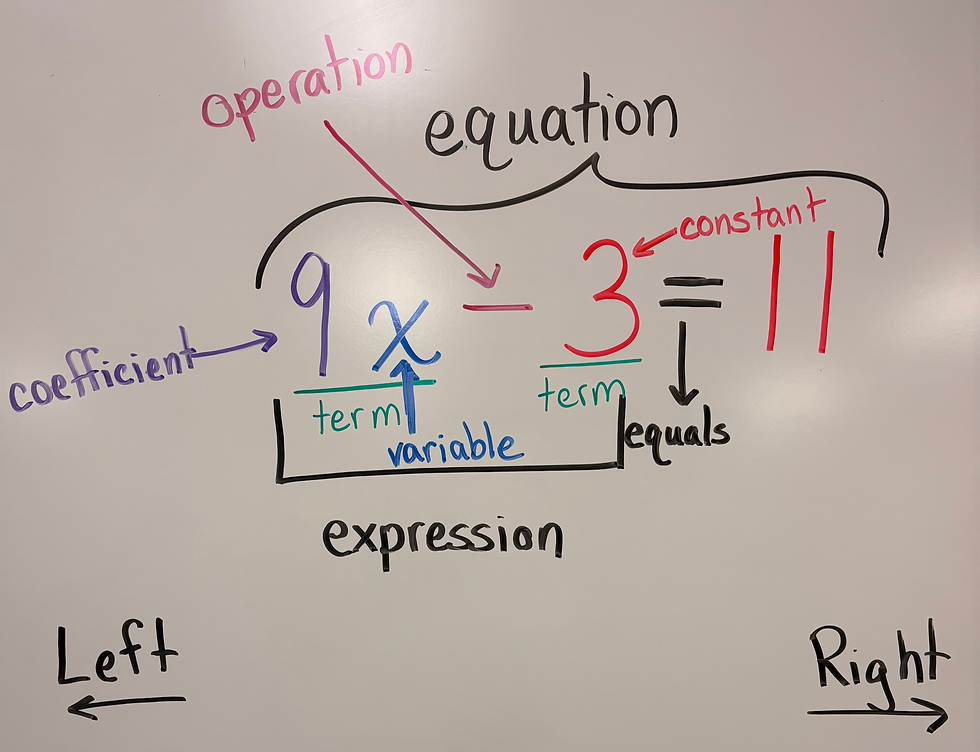
Pair vocabulary with visuals and examples so students can connect words to ideas
For example, instead of asking students to memorize a definition, you might show a visual and ask what they notice, compare correct and incorrect examples, or revisit the word multiple times in different contexts. These strategies help students not only recognize but also use vocabulary.
Using AI to Make Vocabulary More Accessible
With the introduction of AI tools, teachers now have a practical way to support without spending hours rewriting materials.
AI can help you:
take a dense textbook definition and rewrite it in student-friendly language
generate multiple versions of a definition for different reading levels
keep the mathematical meaning intact while reducing language complexity
When used intentionally, AI becomes another support, similar to sentence frames or visuals, rather than a replacement for instruction.
What Comes Next: Turning Ideas Into Classroom Practice
Recognizing that vocabulary is a barrier is only the first step. The real question is: What does this look like in a busy classroom with limited time?
Over the next few posts, I'll continue to share strategies and supports to help your ELLs succeed in class.
Because when students understand the language of math, they’re far more confident, capable, and willing to engage.


Comments